How Much Does a Custom Website Cost in 2027? Real Prices and What Drives Them


Ask any agency what a website costs and you'll almost always hear the same answer: "It depends."
It's true, but it's frustrating when you're trying to plan a budget. So here's what a custom website actually costs heading into 2027, what drives the price up or down, what you'll keep paying after launch, and how Cafio prices its own websites.
How much does a custom website cost in 2027?
A custom website built by an agency typically costs $2,000 to $250,000+. According to Clutch's verified client reviews, most agency projects come in under $10,000, while large enterprise builds sit at the top of the range. Here's how the market breaks down:
Where you land in that agency range depends on size and complexity, which we'll get into next. For context, Clutch puts the average agency project at about $38,000, pulled up by a smaller number of very large builds. So if you've been quoted $40,000 for a five-page site, ask questions. If you've been quoted $800 for a custom site, ask even more.
What affects the cost of a custom website
Two websites can look similar and still be priced $20,000 apart. These are the factors that actually move the number.
Number of pages. A five-page site and a 40-page site are different projects. Every page needs to be planned, designed, written, built, and tested.
Custom design vs. a template. A template gets you online faster and cheaper. Custom design is built around your brand and your customers, which takes more time. Neither is wrong. It depends on how much your site needs to set you apart.
Content and copywriting. Somebody has to write every word. If you supply polished copy, the price drops. If your agency writes it, expect that to be a real line in the budget, and worth it if the copy actually sells.
Functionality. Booking systems, ecommerce, member logins, CRM connections, and calculators all add development time.
A CMS. If you want to publish blog posts, case studies, or listings yourself, the site needs a content management system set up properly.
Platform. WordPress, Webflow, Shopify, and fully custom code each come with different build and upkeep costs. We build on Webflow because it loads fast and lets you update your own content without calling a developer.
Animation and 3D. Scroll animations, interactive sections, and 3D elements make a site memorable. They also take skilled people to build without slowing the site down.
Speed and performance. Fast sites take more care to build, and it matters. Portent's 2019 site speed study found conversion rates drop an average of 4.42% for each extra second of load time between zero and five seconds.
SEO and AEO setup. Clean structure, metadata, and content built to show up in Google and in AI answers like ChatGPT and Google's AI Overviews. Some agencies include this. Some charge extra. Some skip it entirely.
How to calculate your website's ROI
A better question to ask is "What will this website make me?" Here's a simple way to estimate it with your own numbers:
- Leads per month = monthly visitors × website conversion rate
- New customers per month = leads × your close rate
- Revenue from the website per year = new customers per month × average customer value × 12
- Return = (revenue from the website − cost of the website) ÷ cost of the website
Here's an example with made-up numbers, just to show the math. Say your site gets 1,000 visitors a month and converts 2% of them, which is 20 leads. You close 25%, so 5 new customers a month. If an average customer is worth $2,000, the site brings in $120,000 a year. On a $15,000 website, that's a return of 700% in year one.
Your numbers will be different. Google Analytics shows your visitors and conversion rate, and your CRM or sales records show your close rate and customer value. Run the math before you compare quotes, and the right budget usually becomes obvious.
The most expensive problem: the leads you never see
Now flip that example around. A poorly made website doesn't just look bad. It costs you leads and revenue, and it can hurt your reputation. When a site loads slowly, breaks on a phone, or feels unprofessional, visitors leave without ever reaching out, and some remember your business for the wrong reasons.
Keep the same numbers, but drop the conversion rate from 2% to 1%. Revenue from the site falls from $120,000 a year to $60,000. That's $60,000 in lost revenue every year, and it never shows up on an invoice.
Ongoing website costs after launch
A website isn't a one-time purchase. It's closer to owning a building: there's the build, and then there's upkeep. Budget for these:
- Hosting. On Webflow, paid Site plans start at $15 per month billed yearly, and the Premium plan most marketing sites need is $25 per month billed yearly, after Webflow simplified its plans in May 2026.
- Your domain. A small yearly renewal fee.
- Maintenance. Updates, security, uptime monitoring, and fixes. WebFX's 2026 pricing data puts maintenance at about $35 to $100 per month for a small business site, $125 to $500 for a larger business site, and $350 to $4,500 for a complex custom site.
- SEO and AEO. Rankings aren't permanent. Competitors keep publishing, and search keeps changing.
- New content. Each new blog post or landing page is another chance for someone to find your business through search.
The biggest mistake I see is spending everything on the build and nothing on what comes after. A beautiful site that never gets updated slowly turns into a dated one.
AI website builders: cheap to start, costly to manage
AI-built websites are getting better fast, and I won't pretend otherwise. We use AI in our own workflow too. But if you're not a developer, launching and managing an AI-generated site can come with some real headaches, such as:
- Security holes you can't see. AI builders are built to make things work, not to make them safe. In 2025, researchers found that 170 of 1,645 apps made with one popular AI builder, about 10%, had left their databases open to anyone. If your site collects customer data, that risk is yours.
- When it breaks, you're stuck. If you can't read the code, every fix is another prompt, and AI fixes often break something else. Each prompt can also add code you never see, slowing your site down and making it more fragile.
- AI can delete your work. In July 2025, an AI agent on a popular coding platform deleted a founder's live database despite being told to freeze all changes. Rolling back the code won't always bring lost data back.
- Hidden SEO problems. Many AI-built sites load their content with JavaScript, which can be harder for search engines and AI crawlers to read. Missing metadata and messy page structure are common.
- Accessibility problems. Alt text, color contrast, and keyboard navigation often get skipped.
- Unpredictable costs. Most AI builders charge in credits, and top-ups cost extra, so the $25 plan rarely stays $25.
- A site that looks like everyone else's. AI builds from the same patterns it learned from millions of other sites.
If you already have an AI-built site, you don't have to start over. Have someone who can read code check its security and SEO before it handles customer data. And if your website is how customers find you and decide to trust you, that's when a custom build earns its price.

Red flags in a website quote
A low price isn't always a bargain, and a high one isn't always a ripoff. Watch for these instead:
- No discovery conversation. If someone quotes a price before understanding your business, they're quoting a template.
- Vague scope. You should know how many pages, what features, and how many rounds of revisions you're paying for.
- You don't own it. Make sure the site, the domain, and your content belong to you, not the agency.
- Nothing about after launch. Who fixes it when something breaks? Who updates it? If the answer is unclear, the cost is too.
- No SEO basics. A site that can't be found is an expensive brochure.
- Promises of guaranteed rankings. Nobody controls Google. Anyone who guarantees page one is either overpromising or cutting corners that can get you penalized.
Custom website pricing at Cafio
As promised, here are our numbers. Cafio charges competitive agency rates, with web development projects ranging from $3,000 to $100,000+ depending on complexity, page count, and functionality. Most of our clients fall within the $5,000 to $15,000 range, and builds usually take 4 to 8 weeks from discovery call to launch.
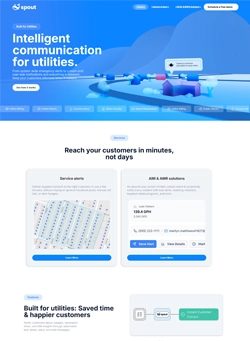
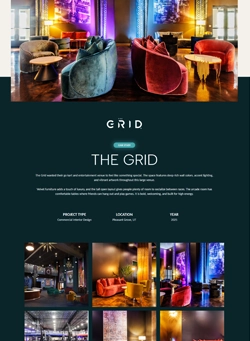
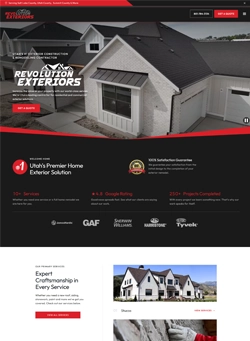
Every site we build is designed around your brand and set up for SEO and AEO from day one. You can see what that looks like in our portfolio, from Stage 7 Design's project-heavy site to Spout's interactive 3D homepage. After launch, we offer retainer plans for website management, SEO and AEO, and content growth, so your site keeps improving.
If you'd like a real number for your project, book a free discovery call. We'll learn about your business, talk through what you actually need, and give you an honest recommendation, even if that recommendation is that you don't need us yet.
Frequently asked questions
How much does a custom website cost in 2027? It's common for agency-built websites to cost $2,000 to $250,000+, though most land under $10,000, according to Clutch. The high end is enterprise work ($50,000+): sites with 100+ pages, custom connections to systems like CRMs, inventory, and payment platforms, multiple languages, strict security and accessibility requirements, and a full team of strategists, designers, developers, and testers working for months. At that scale, you're paying for a system that runs a big part of the business.
Why are custom websites more expensive than templates? A custom site is planned, designed, and written around your specific business and customers. That takes more time than adapting a pre-built layout, but it's what helps your business stand out and convert visitors. At Cafio, the real value is the 25 years of combined marketing experience behind every build. We plan your site around what actually brings in customers, so it's built to earn a much stronger return on your investment than a template can.
What are the basic ongoing costs of a website? At minimum, you'll pay for hosting and a domain. Webflow hosting starts at $15 per month billed yearly. Many businesses also choose a retainer plan, and Cafio offers plans for website management, SEO and AEO, and content growth.
How long does it take to build a custom website? At Cafio, most projects take 4 to 8 weeks from discovery call to launch, depending on scope and how quickly content and feedback come in.
Is an AI website builder good enough for my business? AI builders are improving quickly, but they come with real risks if you're not a developer: security holes, SEO problems, and sites that break when you try to fix them. For a business that needs to stand out, rank, and generate leads, a custom site built around your strategy is the safer investment.
Sources
- Clutch, Web Design Company Pricing Guide 2026, based on verified client reviews
- WebFX, Website Maintenance Pricing 2026
- Webflow, Pricing, Site plans as of the May 2026 update
- Portent, site speed and conversion rate research (2019)
- National Vulnerability Database, CVE-2025-48757
- eWeek, AI Agent Wipes Production Database, Then Lies About It
- Clique Studios, Website Redesign Cost & Pricing